
Indonesia's leather and footwear exports are back in the spotlight. From January to September 2026, the sector reached USD 7.22 billion, up 4.36 percent year on year, according to a Ministry of Trade press release published on Saturday, 14 November 2026. Sports shoes contributed USD 3.14 billion, while specialized footwear such as safety shoes and medical or orthopedic footwear grew 6.7 percent to USD 2.05 billion. The United States remains the largest market at USD 2.92 billion, or 40.4 percent of total exports.
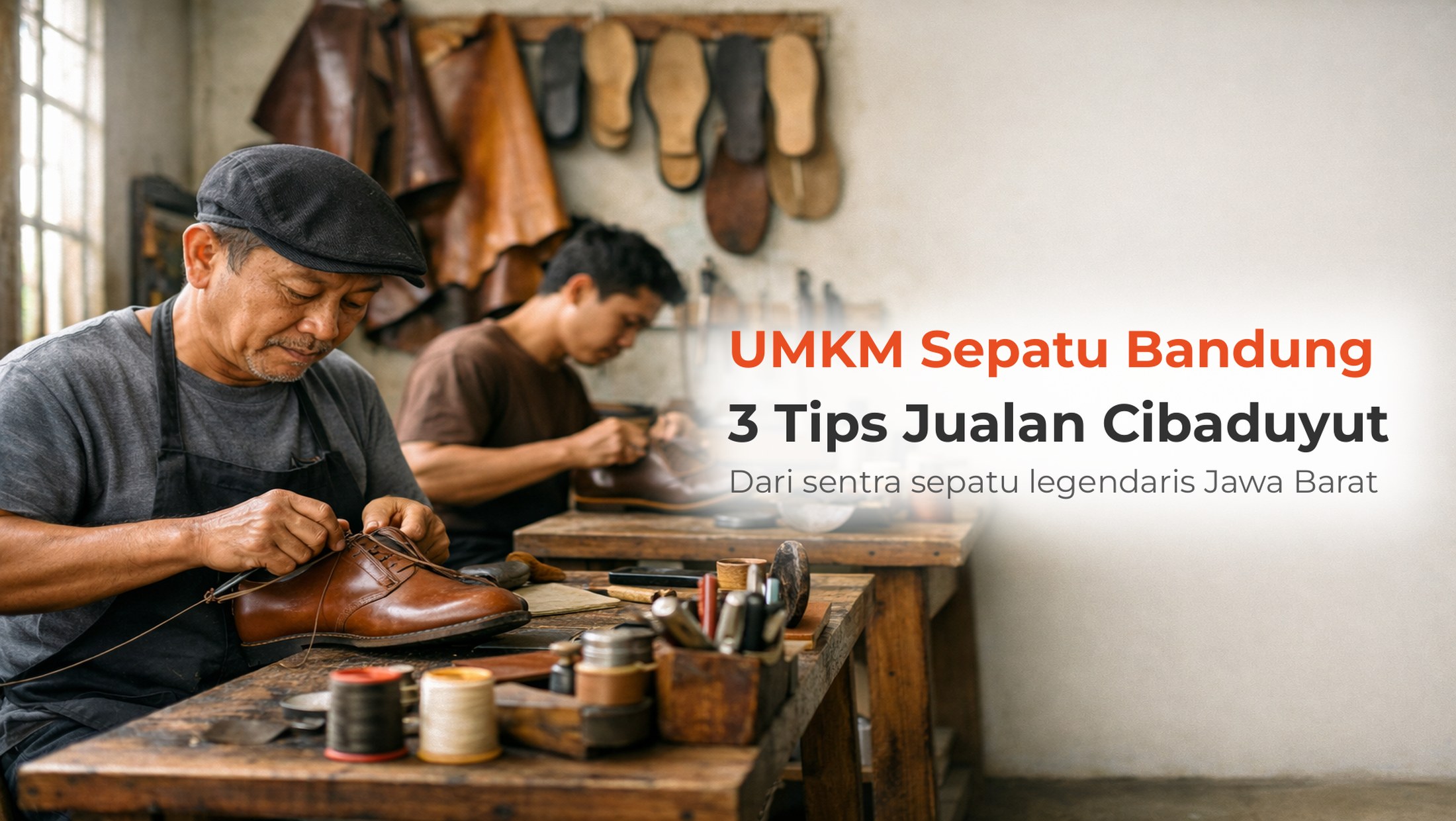
Behind those big numbers are the hands of skilled craftsmen. One of them is in the south of Bandung: Cibaduyut, an area known since 1978 as Bandung's largest shoe-making center and designated a tourist destination since 1989. Yet behind its reputation, the Bandung shoe MSMEs of Cibaduyut face a serious test. Data from the West Java Industry and Trade Office recorded only around 50 business units remaining in 2023, down sharply from 577 units with 3,008 workers in 2010.
The good news: the 2026 Economic Census from Bandung City's statistics office is currently surveying hundreds of thousands of business units across the city, including Cibaduyut, so fresh data on this industry will soon be clearer. The government is also getting more serious: in September 2026, the Deputy Minister of Trade visited Bandung's shoe industry and encouraged craftsmen to shine even brighter in world markets amid the flood of imported products. This article summarizes 3 sales tips that footwear business owners in this city can use right away, whether you have been in Cibaduyut for years or are just starting out.
The number of shoe craftsmen in the Cibaduyut area has declined over the past decade:
| Year | Business Units | Workforce |
|---|---|---|
| 2010 | 577 units | 3,008 people |
| 2016 | 148 units | 733 people |
| 2023 | around 50 units | sharply reduced |
Source: West Java Industry and Trade Office and historical data of the Cibaduyut industry.
Tip 1: Bandung Shoe MSMEs Must Know the Production Cost per Pair
Cibaduyut shoemakers generally produce everything themselves from the start: cutting patterns, stitching, attaching soles, up to finishing touches. Because materials and labor are often mixed with household expenses, many business owners do not know exactly how much it truly costs to make one pair of shoes. Without that number, pricing is just guesswork.
Try calculating the cost components per pair separately:
- Raw materials per pair: leather or synthetic leather, soles, glue, thread, and insoles. Record the purchase price divided by the number of pairs it yields, not just the total shopping bill.
- Labor: if you use freelance craftsmen, set a wage per pair or per day and average it over production volume.
- Operational costs: electricity, gas for glue-heating tools, rent, and material delivery fees.
- Indirect costs: packaging, transport to markets or couriers, and marketplace fees if you sell online.
Once every component is recorded, you can determine the cost of goods sold (COGS) per pair and add a healthy margin. With neat records, you can also answer questions from bulk buyers about unit prices, wholesale prices, and special pricing for institutional orders without confusion. In Qasir, recording income and expenses like this can be done straight from your phone. Learn how in our article on recording business income and expenses so your shoe business cash flow is always monitored.
Tip 2: Raise Minimum Orders and Apply Wholesale Pricing
A classic complaint of home-based shoe makers is many small orders arriving at once while production capacity is limited. One home shoe business in Cibaduyut can produce up to 40 pairs a day, while larger ones can pack 600-700 pairs per week. Accepting every order without conditions creates backlogs and can sacrifice quality.
A common solution is to direct buyers toward a minimum order quantity (MOQ), the minimum number of pairs per model or size. With MOQ, craftsmen can:
- Lower the cost per pair because production runs in a single batch of the same materials.
- Reduce pattern changes and sewing machine setup time.
- Increase the transaction value per buyer so cash flow becomes more stable.
Alongside MOQ, apply a tiered pricing scheme: retail price for single buyers, wholesale price for a certain quantity, and special pricing for institutional, school, or corporate orders. A real example from Cibaduyut: some craftsmen focus on leather formal work shoes, boots, and institutional orders because the value per transaction is far higher than casual shoes. Study tiered pricing in depth in our article on maximizing sales with the wholesale price feature so your pricing scheme is neat and easy to explain to buyers.
Tip 3: Store Customer Data and Prospective Bulk Buyers
Handmade leather shoes have a different character from factory products: stronger stitching, customizable materials, and made-to-order sizes. Advantages like these are most valued by repeat buyers, such as customers who order new work shoes every year or institutions that replace their uniforms regularly.
That is why every footwear business owner in the city should start storing customer data: name, phone number, shoe size, favorite model, and last purchase date. This simple data lets you do several things:
- Notify old customers about new models or promotions without big advertising costs.
- Predict repeat orders, for example reminding institutions that usually order in a certain month.
- Offer maintenance or special-size solutions for customers who already trust your product quality.
You do not need a complicated app to start; what matters is consistency in recording every transaction and buyer contact. Once the data grows, you can manage customers more systematically. Read the full guide in our article on the importance of customer data for MSMEs so your loyal customers keep coming back.
Other Leading Industries of Bandung Worth Learning From
Shoes are not the only strength of Bandung's economy. Two to three other local industries can inspire different ways of selling.
First, the bandros and ngohiong food trade. Bandros, a cake of rice flour and coconut milk grilled in a special mold, is sold widely by street vendors at affordable prices and high volumes. Ngohiong, a distinctive Bandung fried meat dish, survives with the opposite strategy: a signature product for a specific market with buyers willing to queue. Both show that you do not always need a mass market; what matters is knowing exactly who your buyers are.
Second, the distro t-shirt and creative products industry. This city is known as the fashion capital for Indonesian youth, and the city's leather and footwear creative products contribute to the creative sector's export performance. At the MSME level, many local t-shirt and bag brands build their names through original designs and direct sales via social media.
The key lesson from all three: every industry has its own most suitable way of selling. Handmade leather products win on quality and long-term buyer relationships, not on product turnover speed.
FAQ About Bandung Shoe MSMEs
What makes Cibaduyut shoes different from factory-made shoes?
Cibaduyut shoes are generally made by hand with high attention to stitching strength and material quality. Some craftsmen accept custom orders such as non-standard sizes, specific models, or institutional needs, which are hard to get from mass-produced goods.
Is leather material for Bandung craftsmen still available domestically?
Historically, Cibaduyut craftsmen relied on cow and buffalo leather supplies from tanning centers such as Sukaregang in Garut Regency. After several local raw material producers stopped operating since 2022, some craftsmen switched to imported materials. Inter-regional cooperation like the Garut-Bandung supply route remains important to keep local materials available.
How much capital is needed to start a home shoe business?
There is no fixed number because it depends on scale and product type. A real example from Cibaduyut: one business grew from an initial capital of IDR 200,000 and promotions on an online marketplace forum in 2009, then developed into a business with dozens of craftsmen. The key is not the size of the capital, but skill, consistent quality, and the willingness to learn how to market products.
How do I market handmade shoes to become widely known?
Combine three channels: online channels such as marketplaces and social media to reach buyers outside Bandung, relationship channels such as MSME exhibitions and mentoring programs to meet bulk buyers, and repeat orders from old customers who are satisfied with your product quality.
Do Bandung-made shoes have export opportunities?
The opportunity exists and is supported by macro trends: Indonesia's leather and footwear exports reached USD 7.22 billion in January-September 2026 according to the Ministry of Trade, with creative leather products growing 13.3 percent. Craftsmen aiming for export markets need to pay attention to consistent quality, production capacity, and destination-country requirements such as documentation and product standards.
Business and Finance Tips for Bandung Shoe MSMEs
Here are four business and finance principles relevant to home-based footwear businesses, adapted from the real conditions of Bandung's shoe industry.
First, protect quality as your main asset. Cibaduyut is called the national quality barometer for footwear because its craftsmen maintain stitching strength and sole durability. One defective product that reaches a buyer can erase trust built over years.
Second, do not let debt control the business. Shoe production needs working capital for materials and wages. Use financing within your repayment ability, record every obligation, and prioritize funds for production that already has orders rather than merely adding stock.
Third, set aside an emergency fund for material supply. Leather and supporting material prices can rise at any time, and dependence on a single supplier is risky. An emergency fund keeps production running when prices move.
Fourth, take advantage of government support momentum. City and provincial governments regularly hold training, exhibitions, and MSME mentoring programs. Participating not only adds knowledge but also opens networks of buyers and fellow craftsmen who can become production partners.
With tidy finances and protected quality, a small shoe business can survive amid the flood of imported products, and even level up into overseas markets.
Qasir Features for Bandung Shoe MSMEs
Most Cibaduyut shoemakers work from simple home workshops, but their recording and business management needs are not simple. Several Qasir features can help Bandung shoe MSMEs run their businesses more neatly without additional administrative staff.
Digital Cashier to Record Shoe Sales
The Qasir digital cashier records every sales transaction directly from a phone or tablet, complete with cash and cashless payment methods. For craftsmen who often handle orders and shipping at once, every sale is stored neatly and can be reviewed anytime.
Inventory Management for Materials and Finished Products
The stock feature helps separate raw material stock such as leather, soles, and glue from finished product stock per model and per size. You can know when materials run low before production is disrupted, and know which models sell best without manual counting.
Sales and Profit-Loss Reports
Automatic sales reports summarize daily, weekly, and monthly revenue, while the profit-loss report calculates profit after accounting for costs. This matters for craftsmen who want to apply for financing or join mentoring programs because neat financial reports are a primary requirement.
Customer Feature for Repeat Orders
The customer feature stores buyer data along with transaction history, so repeat orders from old customers or institutions can be served faster and promotions can be targeted to the right people.
Conclusion
Indonesia's leather and footwear sector is in a positive momentum with USD 7.22 billion in exports from January to September 2026. In this city, the Cibaduyut shoe cluster is part of that story, even though the number of craftsmen has shrunk from hundreds to around 50 business units over the past decade. Big challenges always open big opportunities for those ready to adapt.
Three steps that Bandung shoe MSMEs can run right away are: recording production cost per pair so selling prices are not guesswork, applying minimum orders and wholesale pricing to stabilize production, and storing customer data to work on repeat orders and bulk buyers. Added to disciplined business principles on quality, debt, and emergency funds, a home shoe business can survive and grow amid competition from imported products.
Run Your Shoe Business More Easily with Qasir Features
From sales recording to financial reports, Qasir has features designed for Indonesian MSMEs:
- Digital cashier: record sales from your phone, cash or cashless.
- Inventory management: monitor raw material and finished product stock per model and size.
- Sales and profit-loss reports: monitor revenue and profit automatically.
- Customer feature: store buyer data and transaction history for repeat orders.
- Cash recap: track business cash in and out in one app.
Download Qasir for free on the Play Store or App Store, and start managing your shoe business more neatly from today.