
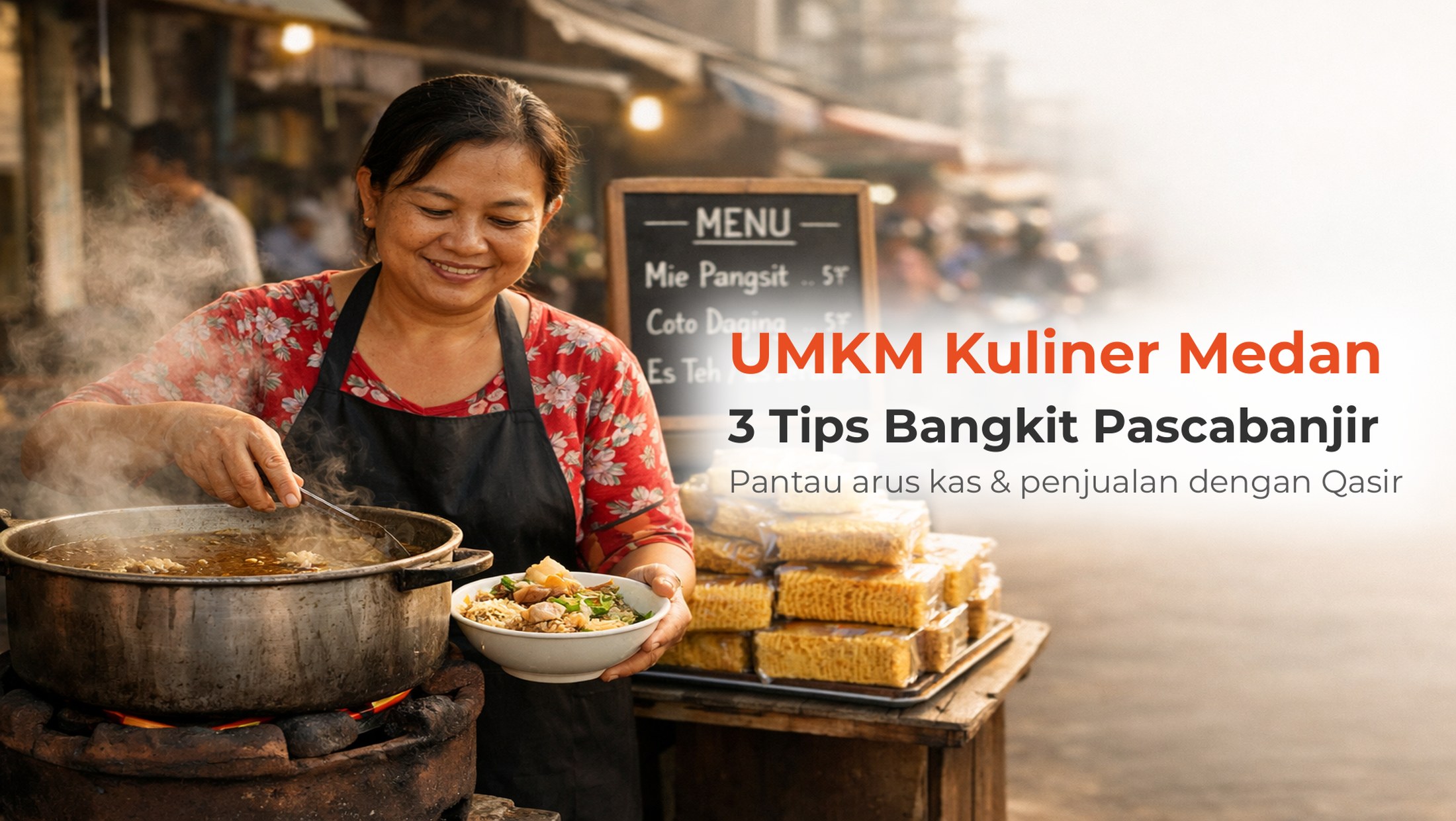
Floods and landslides in North Sumatra in late November 2025 hurt thousands of small business owners, including Medan culinary SMEs. The good news: aid is starting to arrive. The North Sumatra provincial government and Bank Sumut distributed the Presidential Assistance (Banpres) for Micro Business Rehabilitation, Phase I/2026, worth IDR 48.35 billion for 16,118 micro business owners affected by the disaster. The recipients break down as follows: Langkat 9,396, Deli Serdang 6,189, Medan 469, and Humbang Hasundutan 64. The distribution event was held at the Bank Sumut Kampung Lalang branch office in Medan on 13 November 2026. The fund is meant to help micro businesses reopen after the disaster.
| Region | Banpres Recipients |
|---|---|
| Langkat | 9,396 |
| Deli Serdang | 6,189 |
| Medan | 469 |
| Humbang Hasundutan | 64 |
| Total | 16,118 |
Source: North Sumatra Provincial Government, 13 November 2026.
Ani, who runs a chicken noodle stall, used her IDR 3 million aid to buy a new stove. Bank Sumut also prepared 0% interest KUR loans for disaster-affected SMEs, announced on 15-16 November 2026. Read the details on the official North Sumatra government site and the detik.com report.
But government aid is only starter capital. A food business that was once flooded still needs proper money management to recover fast and avoid debt traps. Below are three practical tips for Medan culinary SMEs after the floods: separate emergency funds, track cash flow, and read sales data.
Tip 1: Medan Culinary SMEs Must Separate Emergency Business Funds
Floods can damage stoves, refrigerators, and ingredient stock within hours. Wet cooking oil, flour, and gas can no longer be used, even though they all came from your capital. If business money and personal money are mixed, it is hard to know how much loss you need to cover. Many businesses shut down not because of big losses, but because money ran out with no clear records.
Starting today, open a dedicated bank account for business emergency funds. Set aside 10-20% of weekly revenue into that account and do not touch it except for emergencies, such as a broken stove or spoiled ingredients. This money is different from daily capital, so the business keeps running when surprises hit. Record every use of the emergency fund so it is easy to review and never used twice.
If the emergency fund is not enough and main equipment is broken, consider the 0% interest KUR for disaster-affected SMEs. First learn how to apply for a KUR loan so you are prepared. Remember, every application is still assessed by the bank, so do not assume automatic approval or take on a new burden you cannot repay. Prepare your business documents too, such as a business statement or photos of your stall.
Tip 2: Recalculate Capital and Cash Flow from Day One
After a disaster, ingredient prices often rise. Cooking oil, flour, and LPG gas can cost more because distribution routes are disrupted. If you keep using old selling prices without recalculating, your profit can become thin, even negative. That is why recalculating capital is a must from the first day you reopen, not at the end of the month.
Try recalculating your working capital: record the ingredient cost per portion, add gas and packaging costs, then compare it with the selling price. From there you can set a fair price without burdening buyers. The full method is in the article on how to calculate net business profit.
During the recovery period, record income and expenses every day, even if only in a notebook. This habit makes cash flow clearly visible and helps you quickly notice any bloating costs. Learn recording income and expenses in a way you can use right away.
Do not forget to set aside money for debts or equipment installments that are due. Late debt payments usually incur penalties, and that makes losses even bigger. If needed, negotiate the installment schedule before the due date, not after.
Tip 3: Recover Through Sales Data and Loyal Customers
When bouncing back, focus on the menus that already sell well. Open your sales records, find the best-selling menus and their peak hours, then prioritize ingredient stock for those menus. That way, limited capital goes to the products that generate money fastest. Your stall's signature dishes are usually the ones that sell out quickest.
If you have no records yet, start now: write down which menus are ordered each day and how many portions. Within two weeks, the pattern becomes clear. You will know your busy hours, rarely ordered menus, and stock that is often left over.
Customer data is also an important asset. If you have a list of loyal customers, tell them you are reopening or give a special promotion for returning customers. Customer nostalgia is often the cheapest promotion tool. Learn more about reading sales data and storing customer data so your recovery promotions are more targeted.
Most importantly, keep the taste consistent. Customers can forgive limitations during a crisis, but they come back because the taste is the same as before. Consistent taste is a long-term asset that cannot be bought.
Other Leading Industries in Medan Worth Learning From
Medan has a rich culinary tradition. Medan wonton noodles, for instance, were born from a blend of Chinese and Malay culture through signature broth and chicken oil techniques. Medan coto is famous for its thick gravy from beef slow-cooked for generations. Bika ambon needs an 8-12 hour fermentation process to get its spongy texture. The patience to keep that quality is an important lesson for culinary business owners. Many of them inherit family recipes passed down for generations.
Beyond food, there is Dodol Meranti from Jalan Meranti, made by stirring for hours, and highland North Sumatra robusta coffee traded through Medan as a commercial gateway, following the history of Deli Coffee. Medan is also a trading center for Batak ulos cloth from the Tapanuli region. A similar pattern can be seen in Pamekasan tette chips SMEs, which grew from local wisdom.
Local wisdom worth copying: mutual help during hardship, community networks that fund small businesses, traditional markets as product showcases, and a souvenir culture that makes signature foods easy for tourists to remember.
FAQ About Medan Culinary SMEs
What food sells best in Medan?
Wonton noodles, coto, and bika ambon are among the most sought after, by both locals and tourists. Soup dishes like soto and sop are stable all year, especially in the rainy season.
Is there aid for flood-affected Medan SMEs?
Yes. In Phase I/2026, 469 micro business owners in Medan city received Rehabilitation Banpres of IDR 3 million per person. The next phase awaits the official government schedule.
How much capital is needed to open a food business in Medan?
It depends on the scale. A small stall can start from a few million rupiah for a stove, cooking tools, and initial stock. The important thing is to calculate the COGS from day one so your selling price does not lose money.
How do I keep financial records for a food business?
Start simple: record daily income and expenses, separate personal and business money, then review every weekend. A digital cashier app like Qasir can help with this recording so it is faster and neater.
Does Banpres aid have to be repaid?
Banpres for micro business rehabilitation is a grant, not a loan, so it does not have to be repaid. This is different from KUR, which is a credit and must be paid off on schedule. Make sure you understand the type of funds you receive.
Business and Finance Tips for Medan Culinary SME Owners
- Separate productive and consumptive funds: business money is for capital, not personal needs.
- Track daily cash flow so you know when the business is profiting and when to hold spending.
- Review the business every week: which menus sell well, which ones to pause for now.
- Set selling prices from COGS plus a fair margin, not just by copying neighboring prices.
- Set aside a little revenue for an emergency fund, even if you start with a small amount.
Qasir Features for Medan Culinary SMEs
Digital Cashier to Record Orders During Rush Hours
A digital cashier records every order automatically, so queues stay smooth and no order is missed when the stall is busy. Cash and QRIS payments are recorded in one place, so you no longer need to count manually every closing time.
Daily Sales and Profit Reports to Find Best-Selling Menus
Daily reports show which menus sell best, so you can focus ingredient stock on the products that earn the most. You also know your busy hours.
Cash In and Cash Out to Monitor Cash Flow After the Floods
The cash in and cash out features record every transaction, making it easy to monitor cash flow during the recovery period. No more money disappearing without a trace.
Raw Material Stock Management So Flour and Oil Are Never Overbought
Stock management tells you when ingredients are running low, so flour, oil, and gas are never bought in excess or run out during rush hours.
Conclusion
The floods were tough, but Medan culinary SMEs can bounce back faster with three steps: separate emergency funds from the start, recalculate capital and cash flow every day, and recover through sales data and loyal customers. Government aid helps, but neat money management is what keeps a business alive and growing again. Start with small steps today, because a well-recorded business is far more ready to face hard times. The three tips above can be your starting point.
Manage Your Culinary Business More Easily with Qasir Features
- Digital cashier: process orders faster during rush hours.
- Sales reports: know your best-selling menus and busy hours.
- Cash in and cash out plus cash recap: finances monitored every day.
- Stock management: ingredient stock always fits, never wasteful.
- Customer data: send promotions and reopening news to loyal customers.
- Wholesale pricing: set special prices for bulk purchases.
Download Qasir for free on the Play Store or App Store, and start managing your Medan culinary business from today.