
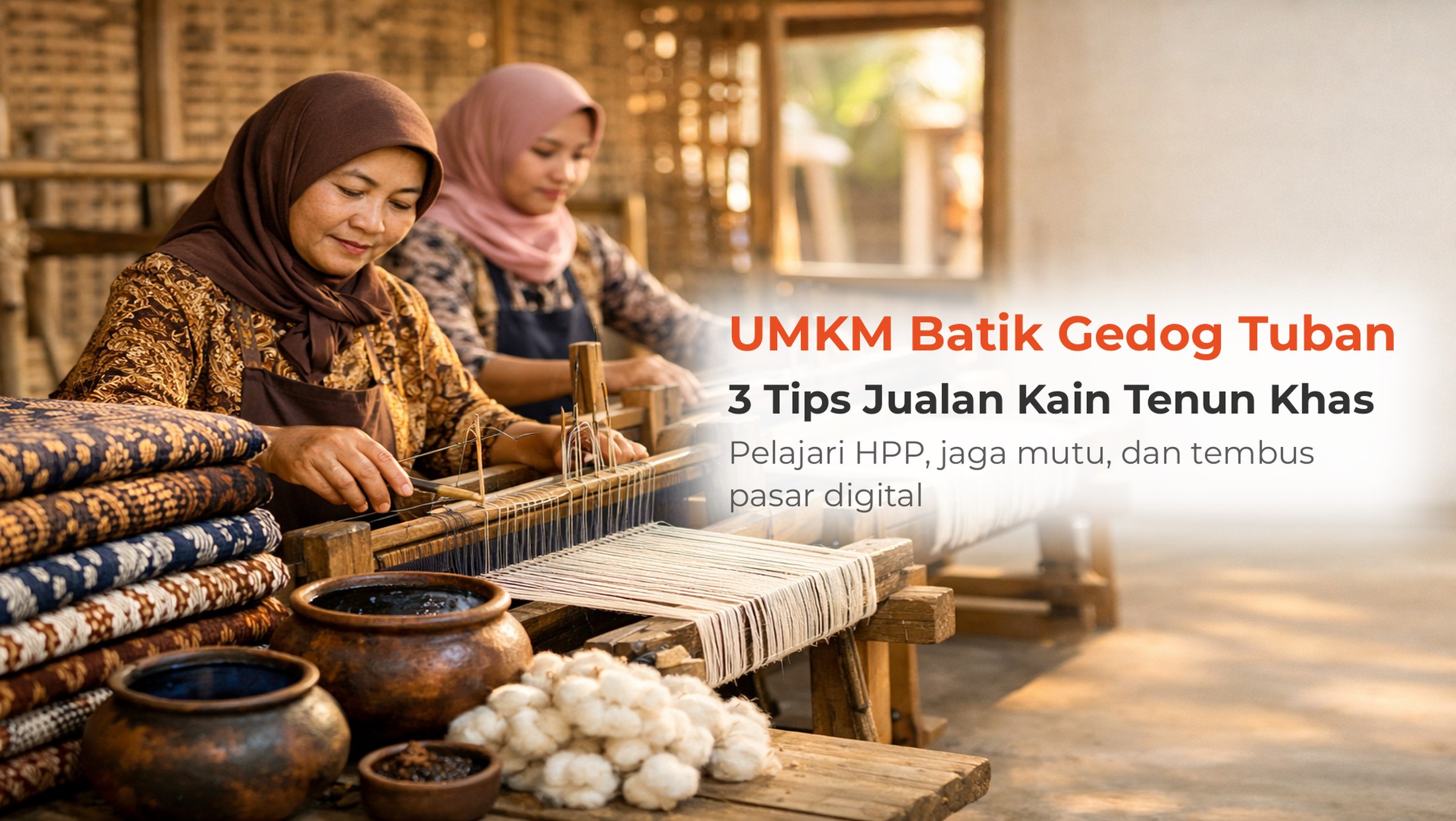
Indonesian batik is back in the spotlight. Recent news reports that batik from the archipelago is now being targeted for the global market, driven by the Ministry of Trade through market access expansion and quality coaching for small business owners. The same momentum is being felt by artisans in Tuban Regency, East Java, who preserve a traditional woven cloth inherited from their ancestors: Tuban batik gedog.
This fabric is produced only in Tuban Regency. Its center is in Kecamatan Kerek, specifically three artisan villages: Margorejo, Kedungrejo, and Gaji. The process begins with manually spinning local cotton into yarn, then weaving it on a traditional loom that produces a distinctive "dog dog dog" sound, which is why this cloth is called gedog weave. Once it becomes fabric, hand-drawn batik (batik tulis) is applied. The result is a thick-textured fabric with natural fibers that is comfortable to wear.
This potential is recognized by state institutions. The Indonesian Export Financing Institution (LPEI) designated Desa Margorejo and Kedungrejo as Desa Devisa, villages whose products are ready to break into export markets. In 2018, around 1,234 craft business units with 1,701 workers were recorded in this center. Its motifs also carry a story: an acculturation of local and Chinese culture seen in the Burung Hong motif, plus natural dyes and local raw materials.
The good news is, this woven cloth is not Tuban's only SME strength. In the coastal districts of Kecamatan Palang and Tambakboyo, salt farmers produce "people's salt" (garam rakyat) that once reached 31,000 tons in 2019, with devoted consumers such as fish salters and processed-fish producers. This article covers selling tips for Tuban weaving SMEs, from calculating production cost (HPP), maintaining quality, to marketing beyond their home region.
Tip 1: Calculate the Cost of Production per Piece of Batik Gedog Fabric, Don't Just Estimate
A common mistake among textile business owners is setting prices based on guesswork. Yet producing this woven fabric involves many cost components: local cotton for spinning yarn, labor-intensive weaving that takes days, wax and tools for both stamped and hand-drawn work, natural dyes, and the artisans' wages. If one component is missed, the selling price can end up below the cost of capital.
Concrete steps:
- Record all costs per sheet of fabric from the spinning stage through finishing, then divide by the number of pieces produced.
- Separate fixed costs (looms, workshop) and variable costs (materials, daily wages) so adjustments are easy when orders increase.
- Add a healthy profit margin, ideally 30–50 percent above the cost of production, because handmade products carry premium value.
- Re-evaluate the cost of production every three months, since cotton and natural dye prices can shift with the seasons.
Artisans in Desa Margorejo who join cooperatives (sanggar) usually record production costs per sheet in a simple way. This habit allows wholesale and retail prices to be set without losses.
To make record-keeping easier, use well-organized income and expense records from the first cloth produced. Profits can be calculated correctly, not by guesswork.
Tip 2: Maintain Quality and Tell the Weaving Story Behind Every Cloth
The advantage of Tuban's authentic handwoven fabric lies in its process: yarn spun by hand, woven on a traditional loom that makes the gedog sound, then worked into hand-drawn motifs with natural dyes. Premium textile consumers, both local and overseas, pay well for this kind of story and authenticity. Unfortunately, many artisans sell their cloth without telling its story, so the price drops to that of ordinary textiles.
Concrete steps:
- Document the production process with photos and short videos on your phone, from yarn spinning through hand-drawn work.
- Include a small card in every package explaining the motif, for example Burung Hong, which was born from the acculturation of Chinese and Tuban local culture.
- Set simple quality standards: fabric free of weaving defects, even color, and neat stitching for finished products such as shirts or dresses.
- Separate grade A fabric stock for exhibitions and export, and grade B for the local market at a more affordable price.
A local wisdom worth emulating from artisans in Kecamatan Kerek is their patience in preserving the quality of this heritage. They do not chase large volumes; instead, they make sure every sheet of cloth deserves to carry the name of Tuban. A similar principle is applied by fabric artisans in other cities such as Solo and Pekalongan, who successfully raised their selling prices through motif stories.
Also compare the sales approach of other regional craft businesses that got organized earlier in recording their best-selling products, for example the article on identifying best-selling products from sales data to set production priorities for the fabrics buyers want most.
Tip 3: Sell Online and Reach Markets Beyond Tuban
Two villages producing this weave have been designated as Desa Devisa by LPEI, which means the export market is not a dream. But to get there, artisans first need to be noticed by buyers from outside their region. Relying only on local buyers leaves the business vulnerable to slow seasons.
Concrete steps:
- Open a catalog on marketplaces and social media with bright photos that show the fabric's texture, not just plain pictures.
- Join events facilitated by the government such as Dekranas exhibitions, Trade Expo Indonesia, or Ministry of Trade coaching programs, as described on the Ministry of Trade website about SME coaching from upstream through marketing.
- Invite out-of-town buyers to preorder specific motifs, so production is better planned and cash flow more stable.
- Monitor local government activity information on the official Tuban Regency website to learn about design training, export clinics, and free exhibitions.
Working capital to fulfill preorder requests can be secured through low-interest loan schemes. Learn how to apply for a KUR loan for SMEs so production is not hampered when large orders come in.
Keep in mind that other Tuban SMEs, such as salt farmers and coastal fish processors, have also started using digital channels to reach industrial buyers outside Java, as palm sugar artisans in West Lombok have done — their story is covered in the article on West Lombok palm sugar SME sales tips. Weaving artisans can adopt the same spirit.
FAQ: Questions Frequently Asked by Tuban Batik Gedog SME Owners
What is the difference between gedog weave and stamped or printed batik?
This fabric uses a weave made from manually spun cotton yarn, so its texture is thick with natural fibers. Stamped and printed batik generally use smooth, thin factory-made primisima fabric. A quick comparison:
| Aspect | Gedog Weave | Stamped/Printed Batik |
|---|---|---|
| Base fabric | Manually spun cotton weave | Factory-made primisima |
| Process | Spinning, weaving, then hand-drawn batik | Stamping or printing |
| Texture | Thick with natural fibers | Smooth and thin |
| Production time | Days per sheet | Relatively quick |
| Buyer segment | Collectors and premium market | Mass market |
Where is the gedog production center?
The center is in Kecamatan Kerek, Tuban Regency, mainly Desa Margorejo, Kedungrejo, and Gaji. The first two villages were designated Desa Devisa by LPEI.
Is this woven fabric suitable for modern fashion products?
Yes. It can be turned into shirts, dresses, skirts, outerwear, and even home crafts such as pillowcases and tablecloths. The local government once proposed product development with designers from LPEI.
How do beginners start selling woven fabric?
Start by joining a sanggar or artisans in Kecamatan Kerek as a reseller, then learn the production process while building your own digital catalog.
Are there mentoring programs for weaving artisans?
Yes. Dekranas and the local government regularly provide design training, equipment assistance, and marketing mentoring. Follow announcements through the official channels of the Tuban Regency government.
Business and Finance Tips for Tuban Weaving SMEs
Beyond the selling strategies above, here are several business and finance principles relevant to weaving artisans and other business owners in Tuban:
- Separate business cash from personal cash. Many craft businesses fail not because products don't sell, but because sales money is mixed with household spending. Open a separate account or ledger from day one.
- Set aside an emergency fund of three to six months of production costs. Cotton and natural dye prices can rise in certain seasons, and orders from out of town often require upfront capital.
- Invest part of the profit in tools and training. Strong sanggar routinely upgrade their looms and send members to design training from institutions such as Dekranas.
- Record every transaction, no matter how small. Well-organized sales data makes it easier to apply for KUR loans, financing, or even bookkeeping for prospective export buyers who ask for business legality.
- Involve the younger generation of the family. Local wisdom such as traditional weaving survives because it is passed down. Give children or nieces and nephews a role in managing the digital catalog, while the older generation safeguards production quality.
Qasir Features for Tuban Weaving Stores
Sales operations for this woven fabric and its finished products can be better organized with the following Qasir features:
Digital Cashier to Record Fabric Sales
The digital cashier feature records every fabric or garment sale directly from your phone. Artisans in Kecamatan Kerek no longer need to write manual receipts, so daily revenue is clearly tracked without a messy cash book.
Fabric Stock Management by Motif
Every Burung Hong motif or color variant can be recorded as a separate product with controlled stock. If grade A fabric stock runs low, the app reminds you before you run out in the middle of preorder requests.
Wholesale Pricing for Boutique and Reseller Buyers
The wholesale pricing feature automatically applies different prices for retail buyers and boutique buyers outside Tuban. Large sales to resellers are still calculated correctly without recomputing one by one.
Sales Reports to Identify Best-Selling Motifs
Sales reports show which motifs and products buyers want most. This data helps artisans decide which fabrics to produce more of before exhibition season or year-end.
Conclusion
Tuban batik gedog is an example of a heritage SME with a strong story: manual weaving that sounds like gedog, natural dyes, the Burung Hong motif, plus Desa Devisa recognition from LPEI. The keys to advancing it come down to three things: calculate the cost of production per piece correctly, maintain quality while telling the story of the production process, and sell online to break into markets beyond Tuban. With government training support and organized record-keeping, artisans in Kecamatan Kerek can level up to national and even export markets.
Manage Your Batik Gedog Sales More Easily with Qasir Features
Qasir has a set of features that help textile and craft business owners:
- Digital cashier to record fabric and garment sales directly from your phone.
- Stock management so every motif and fabric grade is always monitored.
- Wholesale pricing to serve boutique and reseller buyers with automatic different prices.
- Sales reports to know your best-selling products and plan production.
- Cash in and cash out records so business cash flow stays separate from personal finances.
Download Qasir for free on the Play Store or App Store, and start managing your woven fabric sales more organized today.