
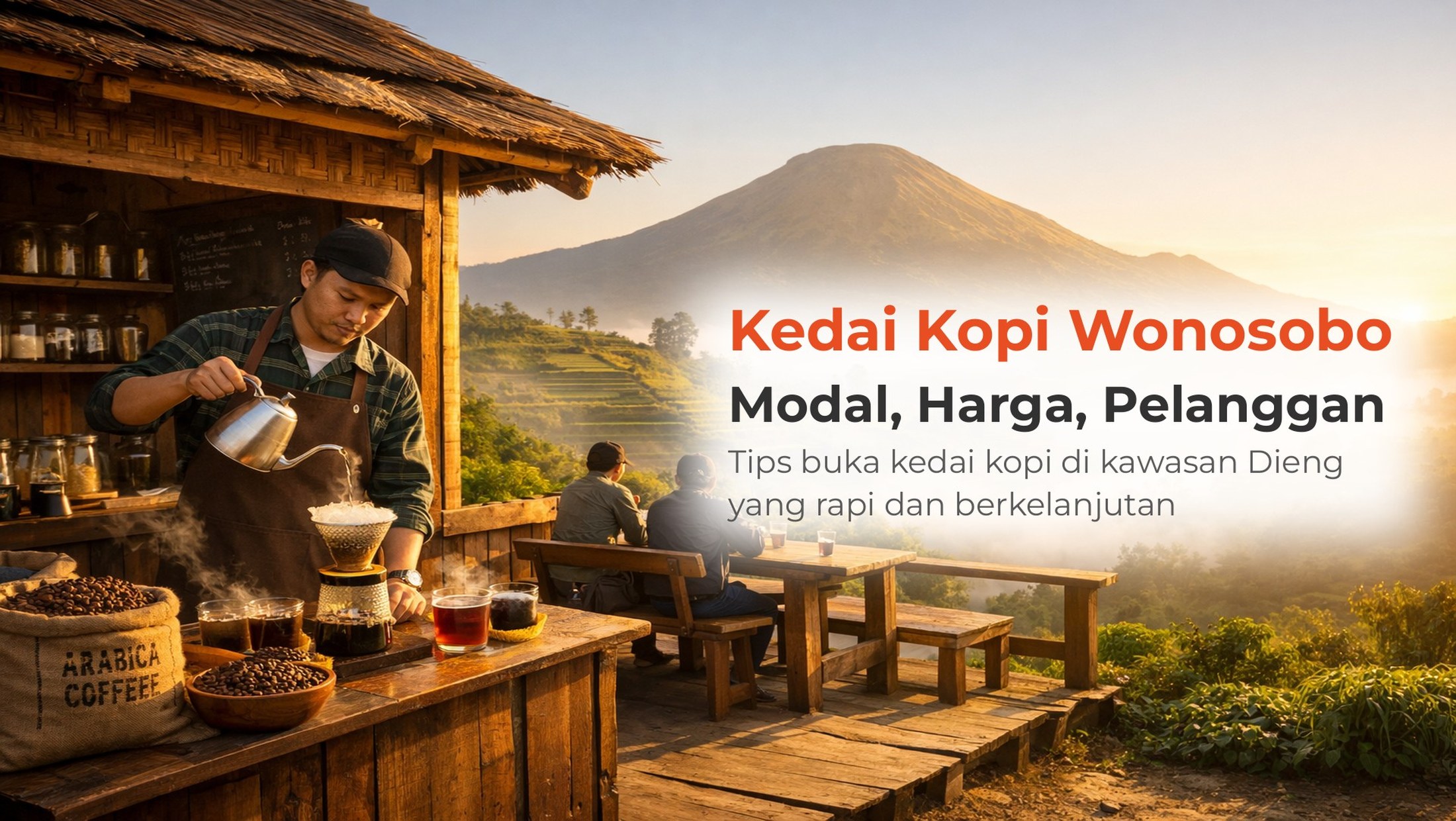
Something big is brewing in the Dieng highlands. The Directorate General of Intellectual Property (DJKI) at the Ministry of Law and Human Rights is developing a GI Tourism program, and the Dieng area has been selected as the very first GI Tourism pilot project in Indonesia, with a Grand Launching planned for 17 November 2026. In an official article, the agency explains how three geographically indicated products — Carica Dieng, Purwaceng Dieng, and Arabica Coffee from the Dieng mountain range — will be promoted as one shared destination. Visitors who join the program are invited to follow the entire journey: cultivation, post-harvest processing, roasting, and finally brewing, through what is called the Dieng Coffee Ritual.
For anyone who runs, or dreams of opening, a Wonosobo coffee shop, this is far more than tourism news. Wonosobo sits at the gateway to the Dieng plateau, and every traveler drawn by the GI Tourism program arrives looking for an authentic local coffee experience. This article walks through the practical side of that opportunity: starting capital, menu pricing, and how to keep customers coming back long after the holiday crowds head home.
Why Wonosobo Coffee Deserves the Spotlight
Start with the bean itself. Kopi Bismo, grown around the Bismo highlands of Wonosobo at roughly 2,400 meters above sea level, is spread across four districts — Watumalang, Kejajar, Mojotengah, and Garung. According to the Central Java office of the Ministry of Law and Human Rights, around 70 percent of Bismo coffee production is consumed locally, which means most of the coffee economy in Wonosobo circulates within the region itself. When you buy local beans for your shop, your money largely stays in the community. You can read more about these origin efforts in this report on the Bismo arabica PIG registration.
In the cup, Wonosobo arabica is known for a sweet tangerine and tobacco character, while neighboring Dieng arabica leans toward bay leaf, palm sugar, pandan, and tamarind notes. Wonosobo coffee is generally fully washed rather than wet-hulled like Sumatran coffee, giving it a bright citrus or lemon acidity, spice and floral notes, and a medium body. The official cupping value for the GI Kopi Arabika Pegunungan Dieng ranges from 83.50 to 85.00 — a genuinely respectable score for specialty coffee. Add a long-standing warung kopi (coffee stall) culture and events like the Dieng Culture Festival, which in August 2026 ran green bean, roastery, public cupping, and brewing stations under the theme "The Dieng Origin Mountain Coffee," and you have a town where coffee is both a daily habit and a tourist attraction.
The ecosystem around the bean is getting stronger, too. Business groups such as HIPMI Wonosobo have pushed for downstream processing of Dieng coffee and carica, while the district government has discussed incentives, drying machines, vacuum sealers, and certification mentoring for local producers. Wonosobo's highlands also grow companion commodities — carica, purwaceng, potatoes, and cool-climate vegetables — which matters for your menu: a coffee shop here can build food and snack pairings from ingredients grown on the same slopes as the beans. For a new owner, that means supply is close, stories are authentic, and "local" is a claim you can actually prove.
Tip 1: Calculate Your Starting Capital for a Wonosobo Coffee Shop Carefully
Most small coffee businesses stumble at the planning stage, not the brewing stage. Before you sell a single cup, list every item you need to spend money on, for example:
- Rent for a small kiosk or space near a tourist area, or a simple cart if you want to start even leaner;
- A brewing setup — manual brewers or a basic espresso machine, depending on your menu;
- A coffee grinder, since freshness matters more than most beginners expect;
- Initial stock of local beans from Bismo or Dieng farmers, plus milk, sugar, and cups;
- Simple packaging if you plan to sell beans or ground coffee as souvenirs.
Label every number as an estimate and add a buffer of around 10 to 20 percent for surprises. If your own savings fall short, you can look into the Qapital funding feature in the Qasir app, which offers business funding directly from the application. And from day one, get into the habit of writing everything down — our guide on why you should record income and expenses instead of relying on feeling explains how this single habit changes the way you make decisions.
One more discipline worth building early: revisit your capital plan every month during the first year. Compare what you actually spent against what you estimated, then adjust the numbers. The decisions of your second six months should be based on your own records, not on someone else's example — that is how a rough estimate slowly turns into a reliable budget.
Tip 2: Price Your Menu with Calculation, Not Feeling
"Feels about right" is not a pricing strategy. Work out the cost of goods sold per glass: beans, milk, sugar, cup, lid, straw, gas, and a small share of rent. For example, a cup of milk coffee in Wonosobo might sell for around Rp10,000-15,000, but your exact price should come from your own numbers. As a rough illustration, a simple capital plan could look like this:
| Component | Estimated Initial Cost (IDR) | Notes |
|---|---|---|
| Kiosk or cart rental deposit | 3,000,000 - 8,000,000 | Depends heavily on location near tourist spots |
| Brewing equipment and grinder | 2,500,000 - 7,000,000 | Manual brew is cheaper; espresso machines cost more |
| Initial bean stock (Bismo/Dieng) | 1,000,000 - 2,500,000 | Buy from local farmers or cooperatives |
| Milk, sugar, cups, packaging | 1,000,000 - 2,000,000 | Restock weekly based on sales |
| Emergency buffer | 1,000,000 - 2,000,000 | For repairs, price spikes, and quiet weeks |
Treat all figures above as illustrative estimates, not official data. Then design small companion items — fried snacks, carica, or highland potato bites — that lift the average transaction, and consider bundles such as a "coffee plus snack" package. If you sell beans or supplies in volume, Qasir's wholesale price feature lets you set different prices for different purchase quantities automatically.
Tip 3: Keep Customers Coming Back After the Holiday Season Ends
Tourist season gives you a crowd; it does not automatically give you regulars. Retention is where a small Wonosobo coffee shop wins. Three simple moves:
- Tell the origin story. Explain the difference between Bismo and Dieng beans, the fully washed process, and the tangerine-tobacco character. Tourists remember stories long after they forget prices, and the GI Tourism momentum makes local origin a genuine selling point.
- Offer a simple loyalty habit. A paper stamp card or a basic digital reward — every ten cups earns one free — costs almost nothing and gives people a reason to return tomorrow.
- Record who your customers are. Note what regulars order and when they visit. If you want to go deeper, read our article on why customer data matters for small businesses so your visitors become repeat buyers.
Wonosobo is also in good company. Similar origin-based strategies work for other Indonesian coffee towns — see our guides for a Temanggung coffee shop and a Gayo Lues coffee shop for comparison.
FAQ About Running a Coffee Shop Business in Wonosobo
How much capital do I need to open a small coffee shop in Wonosobo?
It varies widely. A lean cart-based setup might start around Rp5,000,000-10,000,000, while a small permanent kiosk with better equipment can require Rp15,000,000 or more. Treat any figure as a rough estimate and build your own list item by item, plus a buffer.
What is the difference between Bismo coffee and Dieng coffee?
Both grow in the same highland region, but Bismo coffee comes from the Wonosobo side at about 2,400 meters above sea level, spread across four districts, with a strong character. Dieng arabica is cupped with notes of palm sugar, pandan, bay leaf, and tamarind, while Wonosobo arabica leans toward sweet tangerine and tobacco. Both are typically fully washed.
Is a Wonosobo coffee shop business seasonal because of tourism?
Partly. Weekends, holidays, and events like the Dieng Culture Festival bring spikes, but Wonosobo also has a steady local warung kopi culture. The healthiest strategy is to serve both: capture tourist peaks with origin storytelling, and hold locals with loyalty habits and fair prices.
Do I need formal business legality to start?
Start simple: register as a small business, keep basic bookkeeping, and make sure you pay the required local taxes. As you grow — especially if you package beans under your own brand — consider certification and GI-related labeling, since the region's GI ecosystem is being actively promoted.
Where can I get local coffee beans directly?
Buy from Bismo or Dieng farmers, local cooperatives, or small roasters around Wonosobo. Local institutions and business groups have been pushing downstream processing, drying machines, vacuum sealers, and certification mentoring, so supply partners are increasingly easy to find.
Business and Finance Tips
- Keep an emergency fund. Set aside at least one to two months of operating costs so a quiet tourist season does not force bad decisions.
- Separate personal and business cash. Use a dedicated account or at least a clear ledger, so you always know whether the shop is actually profitable.
- Review your menu periodically. Check which items sell and which only waste stock, then adjust prices or drop weak performers every few months.
- Ride the momentum of events. The GI Tourism Grand Launching and coffee festivals are free marketing — prepare special menus or bundles before they arrive.
Qasir Features for a Coffee Shop
Digital Cashier for Recording Sales
Qasir's digital cashier records every transaction automatically. For a busy Wonosobo coffee shop on a festival weekend, this means no sale gets lost in the rush, and you can serve the line faster.
Raw Material Stock Management
Track beans, milk, sugar, and carica in one place. You will know exactly when stock is running low before the morning crowd, not after you run out mid-serve.
Daily Sales Reports
See today's revenue and best-selling items at a glance. This makes it easy to spot which menu items deserve a price review and which deserve promotion.
Cash In and Cash Out Recap
Every cash movement is recorded and reconciled, so your monthly books stay clean without a spreadsheet built at midnight.
Conclusion
Wonosobo has everything a small coffee business needs: a distinctive origin story with Bismo and Dieng beans, a recognized flavor profile, strong local coffee culture, and a tourism wave backed by the country's first GI Tourism pilot project. The difference between a shop that survives and one that grows comes down to discipline — careful capital planning, calculated pricing, and retention habits that outlast the holiday season. You do not need a fancy outlet to begin; many owners in towns like this start with a cart, a grinder, and a commitment to recording every transaction. What matters is that each cup is priced with intention, served with a story, and counted.
Manage Your Coffee Shop More Easily with Qasir Features
Running the operational side does not have to be complicated. With Qasir, you get:
- Digital cashier — record every sale quickly, even during peak tourist hours;
- Sales and profit reports — understand which menu items actually make money;
- Stock management — keep beans, milk, and sugar at the right levels;
- Cash in and cash out recap — keep personal and business finances clearly separated;
- Wholesale prices and bundles — reward bulk buyers and raise average transactions.
Start today and turn every cup you serve into a well-recorded step toward a more sustainable business. Download Qasir for free on the Play Store or App Store and manage your Wonosobo coffee shop from your phone.