
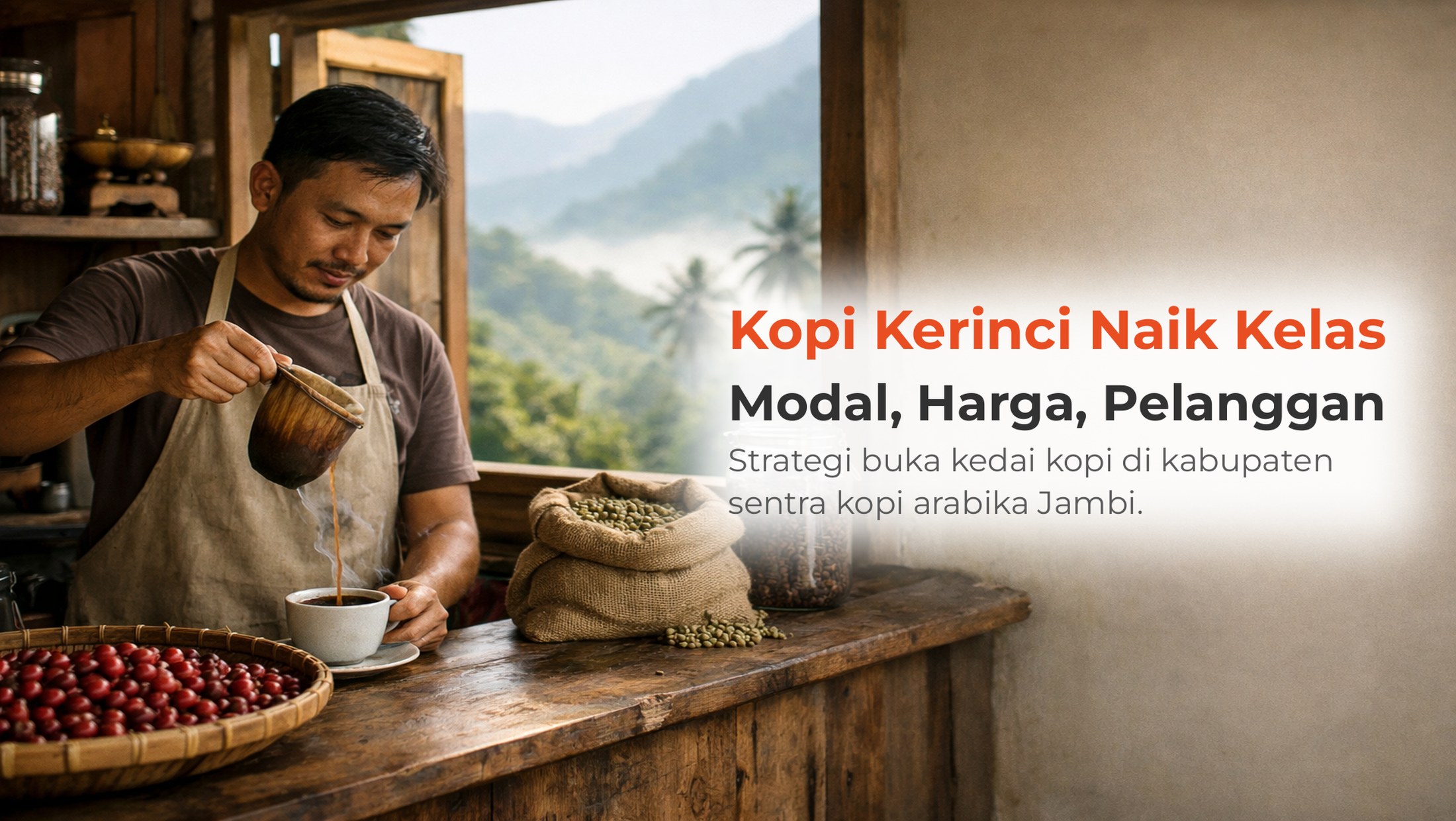
On 10 November 2026, Kabupaten Kerinci marked its 68th anniversary, and the official theme says a lot about what comes next: "Unearthing Potential, Nurturing Tradition, Building the Next Generation, and Driving the Economy Towards a Competitive, Advanced and Prosperous Kerinci." Jambi Governor Al Haris called the regency a buffer for the province's farming sector with strong tourism potential, and noted that its arabica beans and cinnamon are already export commodities. Kerinci coffee is no longer only a local drink; it belongs to a supply chain that crosses borders.
The figures are concrete. At the 2026 Pesta Rakyat Petani in Batang Sangir on 11 and 12 September, seven tonnes went to Canada and seven tonnes to Malaysia, roughly 1.2 billion rupiah per destination. A memorandum between PT Alko and Royal Coffee of the United States commits one container per month in October and November, worth around 6.5 billion rupiah, while BPDLH targets 37.5 billion rupiah for ALKO's partner farmers through 2027, in stages of 100, 800, then 2,500 growers.
That upstream strength helps anyone planning to open a shop here, but the hard part stays the same: bean prices move, and a price set too early quietly eats a thin margin. This guide covers the capital you need, the coffee price that protects your margin, and how to turn first-time visitors into regulars.
Kerinci Arabica Coffee and Local Warung Culture
The arabica belt of this regency sits in Kayu Aro, Kayu Aro Barat, and Gunung Raya. The Ministry of Agriculture is backing an expansion of 650 hectares, and the first planting of 320 hectares took place on 18 September 2026 in Desa Jernih Jaya, Kecamatan Gunung Tujuh. See the official report on Ministry of Agriculture support for the 650 hectare expansion.
Farmers here use four processing methods, and the method decides the flavour before the machine does. Washed beans come out clean and bright for filter and pour over. Dry hull keeps more fruit character, honey lands in between with a rounder body, and natural processing dries the whole cherry for a sweet espresso base. One coffee profile at the centre of the menu beats buying a bigger brewer later.
The arabica area of Kerinci covers 9,124 hectares and produces 4,232 tonnes a year, an average of 0.46 tonnes per hectare based on BPS Jambi figures. PTPN IV has developed 500 hectares around Kayu Aro between 1,200 and 1,600 metres above sea level, and seven local businesses process arabica beans with capital of 6 to 25 million rupiah, employing 7 to 25 workers each.
The market is still wide open. Asosiasi Komunitas Kopi Jambi counted 5 outlets here, 13 in Kota Sungai Penuh, and 84 in Kota Jambi, or 125 across the province in 2019. Cinnamon, rubber, and areca nut keep the town trading on commodities, so a coffee made from beans grown next door fits that rhythm.
Compare how other regional markets handle the same questions: how a Yogyakarta shop planned its capital budget, how a Temanggung outlet prices drinks for students, and how cafes in Gayo Lues turned local beans into customer loyalty.
Tip 1: Calculate Your Starting Capital with Three Scenarios
Capital decides whether a new outlet survives its first year, and the cheapest mistake is copying another shop's budget. A warung on a side street and a cafe on a main road in Sungai Penuh do not cost the same thing, so build the number from three scenarios instead of one:
| Scenario | Concept | Budget Focus |
|---|---|---|
| Simple Warung | Home-brewed drinks, manual pouring, second-hand tables, a small kettle | Equipment used daily, cups, and a small opening stock |
| Small Coffee Shop | Six to ten seats, an espresso menu, a simple menu board | Grinder, brewing machine, and the first stock of beans, milk, and sugar |
| Premium Upgrade | Bigger room on a main road, interior built for photos and long stays | Rent, renovation, furniture, and a full menu launch |
Then hold back an emergency fund of three months for rent, electricity, and wages. Most new outlets do not fail because the drink does not sell; they fail because cash runs out before regulars form. At the anniversary ceremony the governor handed over 455 million rupiah for small businesses in the regency through the Jaringan Maju Jambi Pro-Jambi Tangguh programme, and BPDLH has lined up 37.5 billion rupiah for growers.
Before signing anything, know how you will judge the result. The article on how to calculate real profit when sales look busy shows why a busy cashier is not the same as a healthy business.
Tip 2: Set a Kerinci Coffee Price That Still Protects Your Margin
Bean prices here have swung twice in less than a year. In August 2025 the dry robusta price dropped from 70 to 80 thousand rupiah per kilogram to roughly 40 to 50 thousand, and in January 2026 the wet price paid to farmers fell to about 10 thousand from 14 thousand. A Kerinci coffee price set in one month can be wrong three months later, and that is where small outlets lose money.
Do not chase the lowest number on the board: protect the margin in the menu, not in the price tag. Work from your raw cost per cup, add a margin you can live with, and rebuild the price when the bean price moves.
- Daily cup: the black brew regulars order every morning, priced close to raw cost plus a small margin.
- Milk drink: the volume item, priced with beans, milk, and sugar counted together.
- Premium pour over: a Kayu Aro single-origin lot priced on the story, not on the bean cost.
To see the method, take the verified dry price of about 50 thousand rupiah per kilogram. At a 15-gram dose, one cup of raw material costs roughly 750 rupiah, so price that cup at two or three times the material cost.
If you also sell beans or bottled drinks to resellers, the wholesale price feature keeps retail and reseller prices apart without arithmetic on every transaction.
One last reminder: a low price is not a reason for anyone to come back. Consistent taste, honest cup sizes, and quick service decide which shop a customer returns to.
Tip 3: Build Customer Retention Through Local Coffee Stories
In a regency with few outlets, the person behind the counter can be the reason a customer comes back. The strongest asset is the story of the beans from the Kerinci arabica belt: Kayu Aro lots, washed or honey processed, roasted nearby.
- Put the origin on the menu: name the district and the processing method next to the price, so the cup carries a place, not a label.
- Run a simple loyalty programme: a stamp card for every tenth cup, or a slow-hour offer that gives regulars a reason to return.
- Know your regulars by name and their usual order; in a small town that familiarity is worth more than a discount.
- Use the preference notes you collect for birthday treats and menu offers that match what people actually drink.
Organised customer data makes those programmes work instead of guesswork. Read why customer data matters for repeat visits so promotions reach the right people, and use Qasir live chat for quick answers so a question never waits for days.
FAQ: Questions and Answers About Kerinci Coffee Shops
How much capital do I need to open a coffee shop in Kerinci?
It depends on the concept more than the regency. A simple warung with manual brewing needs far less than a cafe with seating and an espresso machine on a main road, so build the budget from the three scenarios above and keep three months of costs aside. The seven local bean businesses run on 6 to 25 million rupiah.
Which Kerinci coffee is worth putting on the menu?
Kerinci coffee from Kayu Aro, Kayu Aro Barat, and Gunung Raya is the natural centrepiece, and the processing method sets the style: washed for a clean filter cup, honey for a round body, natural for a sweet espresso. Robusta also moves out in volume, 320 sacks or 19.2 tonnes to Egypt in June 2026, so a robusta blend keeps the daily cup affordable.
Is the Kerinci market big enough for a new coffee shop?
There is room. In 2019 the province counted 125 outlets, 84 in Kota Jambi and only 5 in this regency, and the plantation base has grown since with new planting in Gunung Tujuh. A highland town with growing tourism, an expanding arabica area, and a third-place human development ranking in Jambi can sell a local drink.
How do I price my drinks when bean prices keep moving?
Recalculate from raw cost instead of the old price tag. If dry beans move from 50 to 40 thousand rupiah per kilogram, work out the new cost per cup at your own dose, add the same margin, and adjust only the items that changed. A monthly margin review keeps the menu honest.
What permits do I need to open a coffee shop?
Register the business first: a business identification number through the OSS system matched to your scale, a location permit from the regency government, and the food handling licence that fits whether you only serve drinks or also pack beans. Confirm the current list locally before you sign a lease.
Business and Finance Tips for Kerinci Coffee Shop Owners
A business that lasts is mostly a business that is counted. Four habits decide whether a small Kerinci coffee outlet survives its first two years:
- Keep business money and personal money apart, so the profit and loss report stays honest.
- Hold an emergency fund of three to six months for rent, electricity, and wages.
- Record daily income and expenses as they happen, not from memory at month end.
- Review the margin of each product monthly, and reprice or drop the items that tie up time and stock.
Is the market already saturated? Not yet. The 2019 count put 125 outlets across the province, 84 in Kota Jambi and 5 here, and the plantation base has grown since with new planting in Gunung Tujuh. The official Jambi city government report on the 68th anniversary frames the regency's economy around farming, tourism, and trade.
To build the recording habit, start with recording income and expenses without going by feeling. Honest numbers today are the cheapest capital you have for tomorrow.
Qasir Features for Kerinci Coffee Shops
Running a shop in a small regency means serving fast during the morning rush and still knowing where the money went at night. Qasir has four tools for that, and they work the same way for a Kerinci outlet as for a warung in Sungai Penuh.
Digital Cash Register
A digital cashier is a phone-based point of sale that records every order and prints the total. During the morning rush dozens of milk drinks are captured in seconds, and the daily total is already calculated.
Ingredient Stock Management
The stock feature tracks what is left of every ingredient after each sale, from beans to milk and sugar. Low stock shows up before it runs out, so brewing never stops halfway.
Sales Reports
Sales reports summarise daily revenue and the performance of every menu item. You see which drink carries the shop, which one only ties up stock, and which hours need extra hands.
Cash In and Cash Out
The cash in and cash out recap separates sales money from spending on beans, rent, and electricity. At month end you see what is left, without sorting receipts by hand.
Conclusion
Running an outlet in this regency means working with a real advantage: beans grown nearby, a plantation base that keeps expanding, and a town with far fewer shops than the capital city. The harder part is ordinary business discipline. Calculate capital across three scenarios, price from raw cost, tell the coffee origin story on the menu, and record every rupiah that moves through the till.
Run Your Kerinci Coffee Shop More Easily with Qasir
Opening your first outlet or already counting the day at closing time? These Qasir features keep a small shop's daily work in one place:
- Digital cashier to log orders fast when the morning queue reaches the counter.
- Stock management to track beans, milk, and sugar before a shelf empties.
- Sales reports to show which menu earns most and which hours are busiest.
- Cash in and cash out recap so you know the money left at month end.
- Customer data for loyalty offers that reach the people who come back.
Download Qasir for free on Google Play or the App Store, and start recording your Kerinci coffee shop sales from day one.