
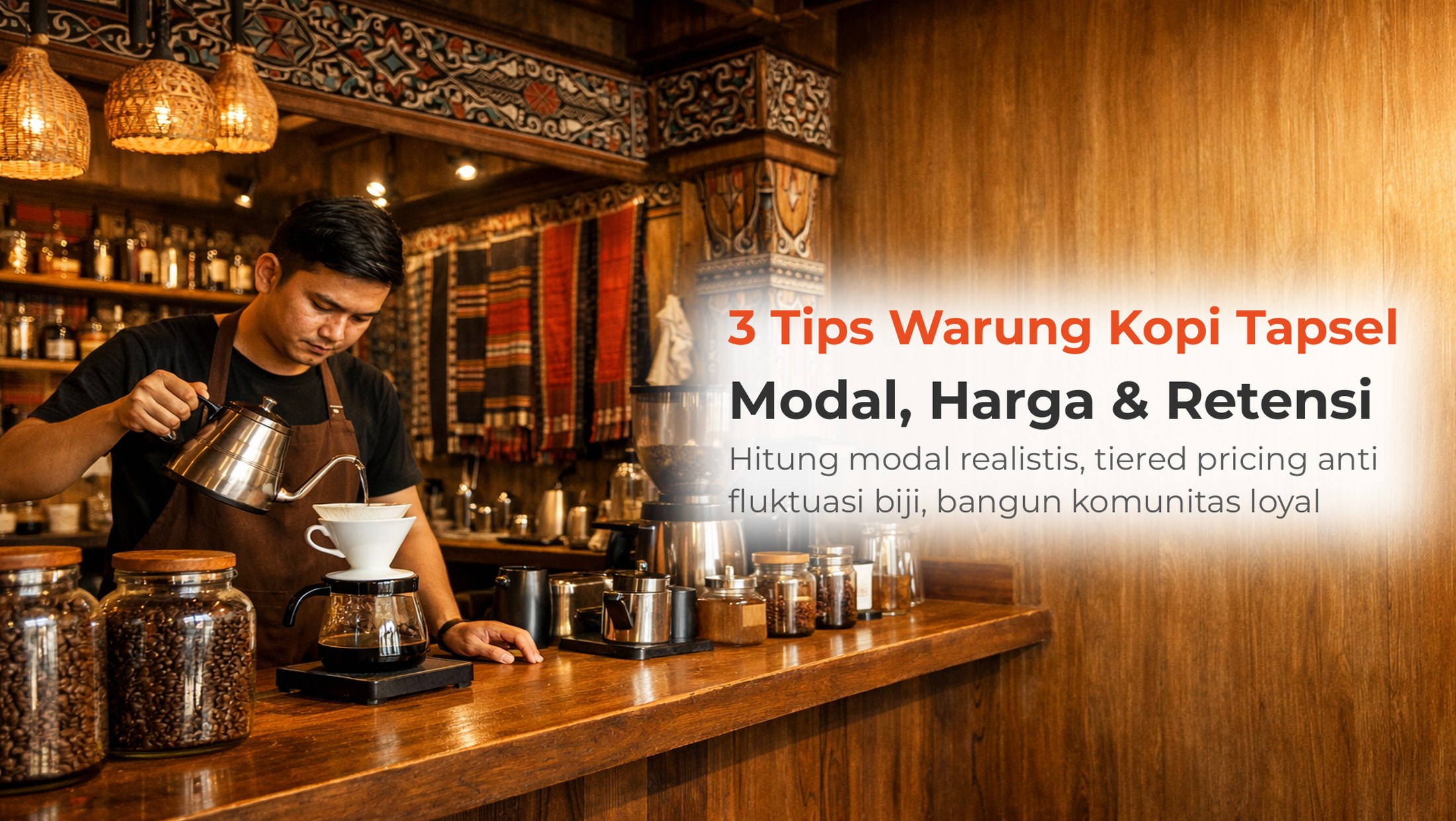
Tapanuli Selatan Regency just made history: 2.5 tons of Tapsel coffee shop exported to Singapore in August 2026, plus winning the Indonesia's SDGs Action Awards 2026 for regency category in November 2026. Behind these achievements, thousands of farmers in Sipirok, Marancar, Arse, and surrounding districts cultivate arabica coffee with a forest-conservation spirit.
It's no secret that a Tapsel coffee shop — especially Sipirok arabica — has long been a premium market staple. Since 2018, the Sigararutang variety from Sipirok earned Geographical Indication (IG) certification, opening export doors to Europe and Singapore. High rainfall on the Tapanuli highlands forces farmers to use wet hulling (wet grinding), a signature Sumatran technique that produces earthy, full-bodied, low-acidity character with palm sugar and spice notes.
Behind the Scenes of Tapsel Coffee: Varieties, Process, and Flavor Profile
Tapsel arabica grows at 1,200–1,500 masl on the slopes of Mount Sibual-buali, volcanic soil rich in minerals. The main variety is Sigararutang (high-yield local superior variety), accompanied by Ateng (dwarf catimor) and heirloom Typica. Standard post-harvest: cherries pulped, fermented 12–14 hours, then wet-hulled at 35–40% moisture before final drying to 12%. Result: full body, mild acidity, palm sugar, chocolate, spice, occasional lemon tea aroma at the peak.
On the robusta side, Marancar District is emerging as a new hub with agroforestry approach. 80,000 seedlings (robusta + arabica) have been planted by 5 community groups (4 LPHD + 1 KTH) on 700 hectares of potential land. The inaugural export of 2.5 tons of Marancar coffee to Singapore proves Tapsel robusta quality is also globally competitive.
BPS 2023 data records Tapanuli Selatan Regency having ~1,200 culinary UMKM, where coffee shops & traditional stalls absorb the most labor after agriculture. This excludes mobile vendors & home-based roasters booming since the pandemic. Local market potential is significant: population >300,000 with "morning coffee" culture as a daily ritual before heading to farms/offices.
3 Tips to Open a Tapsel Coffee Shop: Capital, Pricing & Customer Retention
Tip 1: Calculate Realistic Initial Capital — Not Guesswork
Many beginners fail because capital is set "based on pocket" without field research. In Tapsel, the big advantage is actually on the table: local coffee beans are cheap at farmer level (farmer price ~Rp 80,000–110,000/kg Sipirok green bean), but venue rent, Batak-style wood interior renovation, manual roasting equipment, and UMKM permits (NIB, halal, BPOM for powder) become major cost components.
Concrete steps:
- Survey 3–5 potential locations (along Sipirok–Sibolga main road, near Sipirok traditional market, or office areas) — record monthly rent + electricity + water.
- Calculate COGS per cup: beans (18–20g) + water + sugar/condensed milk + cup + roasting electricity. Target COGS ≤ 35% of selling price.
- Set aside 3–6 months operational emergency fund (barista wages, rent, electricity) — don't let capital run out before break-even.
- Utilize KUR UMKM 2026 program (3–6% interest, ceiling up to Rp 500 million) for roasting equipment + mini huller machine.
With Rp 80–120 million capital, a 15–20 seat coffee shop in Tapsel can start full operations — including roasting in-house for maximum bean margins. See cost breakdown below:
| Component | Estimated Cost | Notes |
|---|---|---|
| Venue rent 6 months (dp 3 months) | Rp 15–25 million | 40–60 m², main road location |
| Batak wood interior renovation | Rp 20–30 million | Tables, chairs, display, power outlets |
| Roasting & brewing equipment | Rp 15–25 million | 1kg roaster, grinder, V60, French Press, scales |
| Permits (NIB, halal, BPOM) | Rp 3–5 million | Via OSS, halal cert mandatory Oct 2026 |
| Working capital 3 months (beans, sugar, milk, ops) | Rp 15–20 million | Buy beans from farmers, stock raw materials |
| Emergency / contingency fund | Rp 10–15 million | Equipment repair, bean price fluctuation |
| Total Estimate | Rp 78–120 million | Adjust to scale & location |
Tip 2: Set Prices When Beans Fluctuate — Don't Just Follow the Market
Sipirok arabica green bean prices swing seasonally (harvest vs lean season). If selling price is static, margins can turn negative when bean prices spike. Tapsel strategy: tiered pricing based on bean grade.
Concrete steps:
- Offer 2–3 menu variants: Single Origin Sipirok (premium grade, Rp 22,000–28,000), House Blend Tapsel (arabica+robusta Marancar blend, Rp 16,000–20,000), Classic Tubruk Coffee (robusta, Rp 8,000–12,000).
- Set floor price per variant: minimum COGS × 2.5×. Raise prices quarterly tracking 3-month average COGS.
- Use Qasir's wholesale price feature for corporate/cafe buyers purchasing roasted beans in bulk — thin margins but volume fills roasting capacity.
Tip 3: Keep Customers Coming Back — Not Just Selling Good Coffee
In Tapsel, "ngopi" culture = gathering, chatting, discussing farm/plantation matters. Shops that only sell drinks quickly go empty. Retention key: create community space + simple loyalty program.
Concrete steps:
- Design comfortable seating (Batak wood, many power outlets, stable WiFi) — target dwell time 45–60 minutes.
- Activate Qasir customer feature: loyalty points per purchase, birthday discounts, WhatsApp broadcast promos to members. Also read why UMKM customer data matters.
- Host weekly free cupping sessions (learn to distinguish Sipirok vs Mandailing vs Gayo) — build community while educating product.
- Track customer preferences via Qasir customer data: who likes sweet, who prefers single origin, who uses oat milk — personalize offers.
FAQ: Common Questions About Tapsel Coffee Shops
Q: What's the minimum capital to open a coffee shop in Tapsel?
A: Starting from Rp 80 million for 15–20 seats (rent, wood renovation, manual roasting equipment, permits, 3-month working capital). Can be lower if venue already has wood interior.
Q: What brewing methods suit Sipirok coffee?
A: V60, Flat Brewer, or French Press — 92–94°C, 3–4 minutes. Double Pour (staged pouring) highlights palm sugar & spice. For espresso: fine grind, 1:2 ratio, 9 bar pressure.
Q: Difference between Sipirok and Gayo coffee?
A: Sipirok has milder acidity (lower chlorogenic acid), fuller body, dominant palm sugar & spice notes. Gayo has more complex acidity (floral, chocolate, fruit), medium body. Sipirok is "smoother" for drinking straight without sugar. See also Gayo coffee shop tips.
Q: Is Tapsel robusta worth selling?
A: Yes. Marancar robusta (wet hulling process) has thick body, dark chocolate & spice notes, suitable for tubruk, milk coffee, and house blend. Selling at Rp 8,000–12,000/cup keeps good margins.
Q: What permits are mandatory?
A: NIB (OSS), halal certificate (mandatory Oct 2026), BPOM for powder/packaged coffee, disturbance/fire permits from regional govt. OSS process ~7–14 business days.
Business & Finance Tips for Tapsel Coffee Shops
- Separate business & personal finances from day one — open separate account, pay yourself a salary as operational expense, not "leftover profit".
- Record every income & expense daily — use Qasir income/expense tracking for real-time P&L, not end-of-month guesswork.
- Calculate COGS per cup weekly — bean prices fluctuate, if COGS isn't updated, margins erode silently. Target gross margin ≥ 60%.
- Maintain 3-month operational emergency fund — Tapsel's long rainy season can disrupt bean supply or customer traffic. Cash reserves save you during negative cash flow.
Qasir Features for Tapsel Coffee Shops
Digital POS to Record Transactions Without Notebooks
Tapsel coffee shop transactions peak morning-evening (tubruk coffee + snacks/keripik). Qasir digital POS records every cup automatically — daily revenue, bestsellers, peak hours visible real-time on phone. No more manual counting on paper lost in the crowds. Learn Qasir digital POS for UMKM.
Automated Bean & Raw Material Inventory Management
Sipirok beans, Marancar robusta, palm sugar, condensed milk, cups, lids — all synced: sales deduct stock, purchases add stock. Minimum stock alerts prevent stockouts during rush hour. Qasir Pro's recipe feature calculates grams of beans needed per 100 espresso cups.
Real-Time Sales & Profit/Loss Reports
View revenue, COGS, gross profit, net profit per day/month/quarter without waiting for an accountant. Export Excel for bank/KUR reports. Compare Single Origin vs House Blend vs Tubruk performance — data decides which variants to keep.
Customer Feature: Loyalty Points & Promo Broadcasts
Customers earn points per purchase, redeem rewards (free 1 cup, 20% discount, merchandise). WhatsApp broadcast to members for promos like "Today Marancar Robusta 30% Off". Customer data becomes business asset, not notebook scribbles.
Qapital: Funding Directly in the App
Need capital for new roaster, renovation, or harvest-season bean stock? Qapital lets you apply for business funding directly via Qasir app — fast process, competitive rates, flexible installments.
Conclusion
Tapsel coffee has strong fundamentals: export-quality beans (Sipirok IG, Marancar agroforestry), government support (700 ha target, PLN Green Bean House), and ready markets (Singapore, Europe exports). Tapsel coffee shop opportunity isn't just "selling good coffee" — it's becoming downstream processing of local beans that adds value at the source.
Success keys: realistic capital calculation, tiered pricing anticipating bean price swings, build community via comfy space + digital loyalty. With tools like Qasir, POS, inventory, reporting, and customers become one dashboard — you focus on coffee quality & service.
Manage Your Tapsel Coffee Shop Easier with Qasir Features
- Digital POS — fast transaction recording, real-time revenue on phone.
- Bean Inventory Management — auto-sync, minimum alerts, recipe calculation per cup.
- Sales & P&L Reports — Excel export for bank/KUR, compare variant performance.
- Customer Feature — loyalty points, WhatsApp broadcasts, drink preference data.
- Qapital (Business Funding) — apply for working capital directly via Qasir app, fast disbursement.
Download Qasir free on Play Store, and start tracking your Tapsel coffee shop revenue today.