
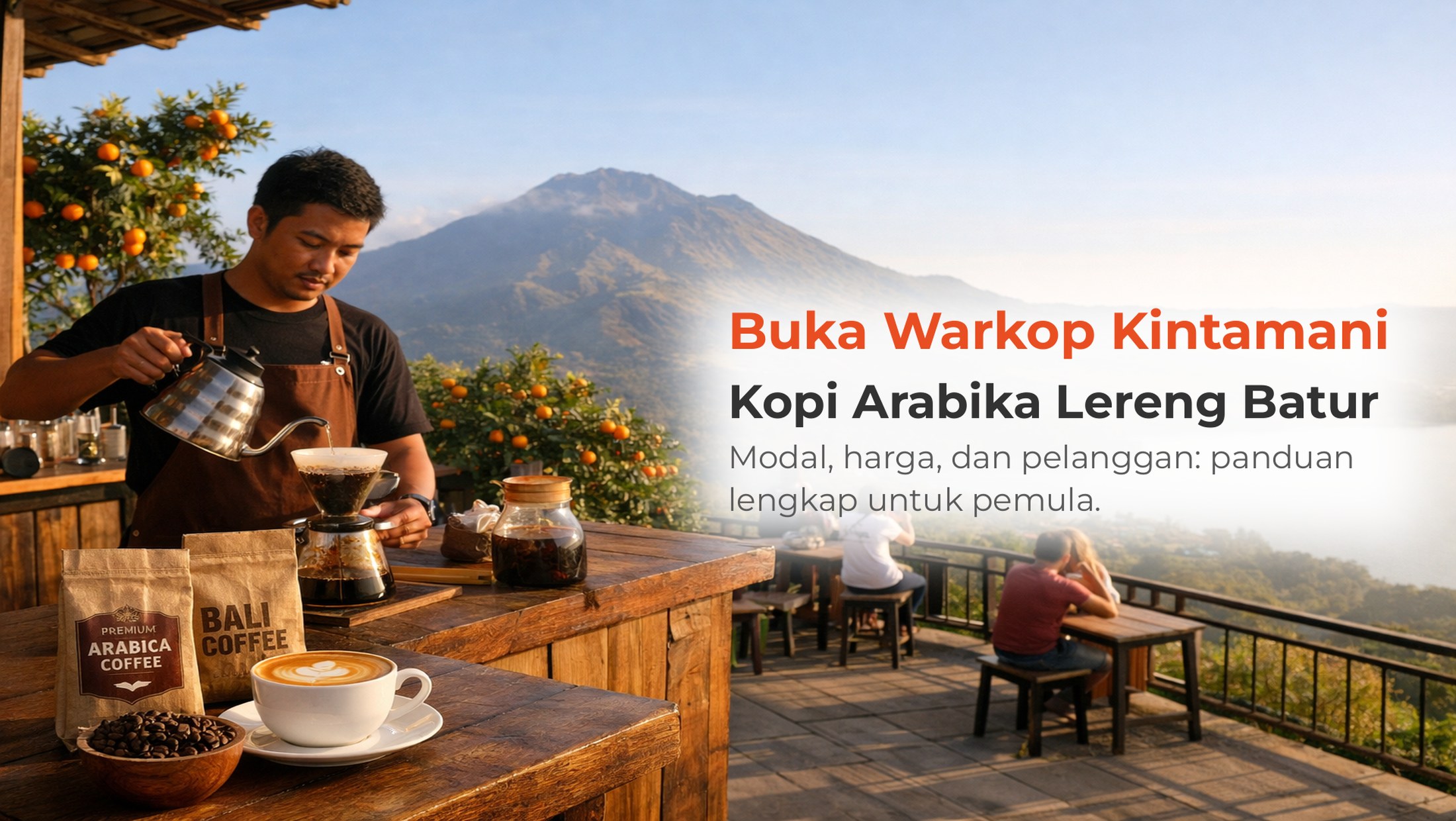
Kintamani coffee is having a moment. The bean processing plant in Mengani village, Kintamani, Bangli, resumed operations in 2026 after being leased by a new operator, and the Bangli regency government targets a 350-hectare expansion of planting areas by 2027. This strengthens the raw material supply and opens a chance for anyone wanting to open a coffee stall or cafe in the Bangli tourism area.
What is more, the number of shops in Kintamani keeps growing. Data from the Bangli Regency Cooperatives and MSME Office records 21 shops in 2022, rising to 36 in 2023. Competition is getting fiercer, so you need a solid strategy from day one.
Kintamani Coffee and Warungs on the Slopes of Batur, Bangli
Arabica from the slopes of Batur has held a Geographical Indication certificate since 2008. Its taste is distinctive: a natural citrus aroma from the farmers' habit of planting citrus among the crops in their gardens. Gardens are managed through 64 subak abian regions, the Balinese irrigation tradition that keeps harvest quality steady.
Bangli's plantations cover about 6,000 hectares, producing around 2,122 tons a year. The regency contributes 54 percent of Bali's production, with Kintamani as its main hub. For small businesses, the good news is the Sentra IKM Kopi coffee center, a regency-owned facility in Catur village. This modern roasting plant processes 10 to 15 kilos of beans per day and serves operators from inside and outside Bangli.
On the downstream side, success stories keep appearing. Enjung Kopi, for example, started in 2025 out of a family's experience managing a plantation. The shop now employs 12 people and opens from morning to night. Stories like this prove a small coffee shop can grow when managed well.
If you are just starting out, these conditions favor you. Raw materials are abundant, the product is already known to the market, and processing facilities are available. The biggest challenge is daily operations: keeping brew quality steady, setting prices, and serving guests from many different regions. Those three things are discussed below.
In terms of taste, Kintamani arabica has an easy selling point: a natural citrus aroma and a light body. This flavor works well as a manual brew for lovers of a clean cup, and as a milk based menu item for customers just learning to drink black coffee. Profiles like this make cafes on the slopes of Batur feel different from cafes in big cities.
Tip 1: Work Out Your Startup Capital Before Opening
Before signing a lease, work out your startup capital. The biggest costs are usually location rent, light renovations, brewing gear, and raw material stock for the first month. Locations near tourist attractions are promising, but rent far exceeds housing rates.
Concrete steps:
- List the essentials: tables, chairs, manual brewing tools, a coffee grinder, cups, and a display case.
- Keep the raw material budget separate from the daily operating budget so they never mix.
- Set aside an emergency fund covering at least three months of rent and wages.
| Startup Capital Item | Priority | Notes |
|---|---|---|
| Brewing gear | Required | Start with manual tools before modern machines |
| Light renovations | Required | Good lighting and comfortable seating |
| Raw material stock | Required | Buy local beans to keep the cost of goods in check |
| Emergency fund | Strongly advised | At least three months of rent and wages |
For a sense of scale, Enjung Kopi operates from 07.00 to 21.00 with 12 staff. You do not have to start that big. Starting small with one or two full time staff is safer for beginners.
Location also sets daily operating costs. Stalls on tourist routes are busy on weekends and holidays; stalls in housing areas have daily regulars. Before signing a lease, calculate how many sales you must average daily so the rent is covered. The method: divide total fixed monthly costs by open days, then add a target margin for raw materials. That figure is your daily revenue target.
Tip 2: Price Your Coffee from Local Beans to Tourist Menus
The main advantage of doing business in Bangli is close access to raw materials. Taking Kintamani arabica beans straight from farmers or through the Sentra IKM Kopi center in Catur keeps your cost of goods controllable. The savings can be redirected toward better milk or sugar.
Concrete steps:
- Calculate the cost of goods per cup: beans, milk, sugar, cups, and power.
- Create two price tiers: a daily menu for locals and a special menu for tourists.
- Offer bundles, for example tubruk coffee plus a local snack, to lift the sale value.
For seasonal menus, use harvest and tourist seasons. When production is abundant, offer a special brew with freshly roasted beans. List the roasting date: customers now understand quality and will pay more for a truly fresh brew. This way you raise the selling price without really raising raw material costs.
A rarely noticed chance is selling packaged Kintamani coffee as a souvenir. Many tourists want to bring home the same brew after their holiday. Sell it in small 100 or 200 gram packs, complete with garden origin and roasting date. That way your stall earns extra income from products to take home, not just daily cup sales.
If many of your guests are small businesses, use the wholesale price feature to sell packaged roasted beans in single units at special prices.
Tip 3: Keep Both Tourists and Locals Coming Back
Kintamani has two kinds of customers: tourists who come once, and locals who come daily. They need different treatment. Tourists care about the beans' origin story and the scenery, while locals want friendly prices and a cosy place to hang out.
Concrete steps:
- Show the brew's origin story on the menu: which garden it comes from, what process is used.
- Make a simple loyalty card for locals, for example buy ten cups and get one free.
- Keep the order data of regulars so service feels personal.
Also keep taste consistent. Local guests notice at once if the recipe keeps changing. Set simple standards: bean dose per cup, water temperature, and brewing time. Standards let all staff serve an equally good drink even when you are off site.
For locals, be a coffee spot that feels close to home. Know your regulars, remember their favorite orders, and now and then offer a new blend to try. A sense of belonging makes guests choose your stall over a newer coffee shop with louder promotions.
Tactics like these are proven in many regions. The article on the importance of customer data for MSMEs covers how to make guests come back to shop. You can also copy tactics from other cities through the article on Surabaya coffee shop sales tips.
FAQ
How Much Startup Capital Do You Need to Open a Coffee Stall in Kintamani?
For a small operation, main capital covers brewing gear, light renovations, and raw material stock for the first month. The amount depends heavily on location. One thing is certain: make a written breakdown before spending any money.
Where Can You Get Kintamani Arabica Beans?
You can buy directly from farmers, through subak abian groups, or use the Sentra IKM Kopi center in Catur village, which also roasts beans.
Does a Small Coffee Shop Need a Cashier App?
It does. With a cashier app, every coffee and food sale is recorded automatically, so you know daily revenue without counting by hand in a notebook. You can also see best-selling menus and the average daily sale.
How Do You Attract Tourists to Your Shop?
Highlight the local story: the beans' origin, the roasting process, and the feel of the Batur slopes. Tourists seek an experience, not just a glass of drink.
Do Kintamani Beans Work in Every Menu?
Kintamani arabica suits both manual brews and tubruk coffee. For milk based menus, adjust the bean dose so the signature citrus aroma comes through and is not masked by sugar. If in doubt, start with two brew styles, then add other menus once you know your guests' tastes.
Business and Finance Tips
Drink businesses move cash quickly, so tidy bookkeeping is the key. Here are simple principles you can apply right away.
- Separate personal cash and business cash. Use a separate account so profit does not mix with grocery money.
- Record every raw material expense. Beans, milk, sugar, and packaging belong in the cost of goods, not written off as small costs.
- Prepare an emergency fund. The rainy season or a tourism slump can suddenly drop revenue. Cash reserves keep the business running.
- Review the menu often. Rarely ordered items should be replaced, not left to pile up as stock.
The guide to recording income and expenses is a great first step to tidy up your shop's finances.
If business is busy, record it with an app so the data is organized right away. Digital records make it easy to see monthly trends, prepare stock before the weekend, and calculate profit without piles of receipts. The faster the data is ready, the faster you can decide.
Qasir Features for Kintamani Coffee Shops
Digital Cashier to Record Daily Sales
The Qasir digital cashier records every sale straight from your phone without a cash book. Your stall's daily revenue is ready at the end of the day without manual counting.
Raw Material Stock Management
The stock feature monitors remaining roasted beans, milk, sugar, and cups, so you know when to restock before supplies run out during the rush.
Sales Reports to Monitor Best-Selling Menus
Sales reports show which menu items sell best. This data helps you pick flagship menus and drop the ones with few takers.
Employee Login Feature for Transaction Security
With the employee login feature, every employee uses a personal account for payments. You can monitor who recorded each sale while keeping cash secure.
Cashless Payments for Tourist Customers
Qasir supports cashless payments like QRIS, which guests can scan directly. Tourists without cash can still pay easily, and the money lands in one report alongside cash transactions.
Conclusion
The prospects for coffee shops and Kintamani coffee in Bangli are bright right now: the bean supply keeps getting stronger, tourist visits are steady, and the rich local story is a draw in itself. The keys are capital planning, sensible prices, and service that makes guests come back. A single cup brewed from Kintamani beans, told well, can be the reason a customer returns. Start small, record every transaction, then grow slowly with the rhythm of tourist visits to this region. Supporting data such as MSME numbers and plantation production can be studied further at BPS Kabupaten Bangli, and the latest news on this region's bean processing through local Bangli news coverage.
Manage Your Coffee Shop More Easily with Qasir Features
Once the strategy is ready, operations get lighter with Qasir. Here are the features most relevant for stalls, coffee shops, and cafes:
- Digital cashier - record every sale straight from your phone without a cash book.
- Stock management - monitor remaining beans, milk, and other ingredients before they run out.
- Sales reports - see the best-selling menu and daily revenue on one screen.
- Cash recap - summarize cash in and cash out so the shop's finances stay tidy.
- Outlet feature - manage two shop branches at once through the Qasir outlet management feature.
Download Qasir free on Play Store, then run your Kintamani coffee shop more smoothly. If you manage a cafe in Bangli, all the features above work from one app.